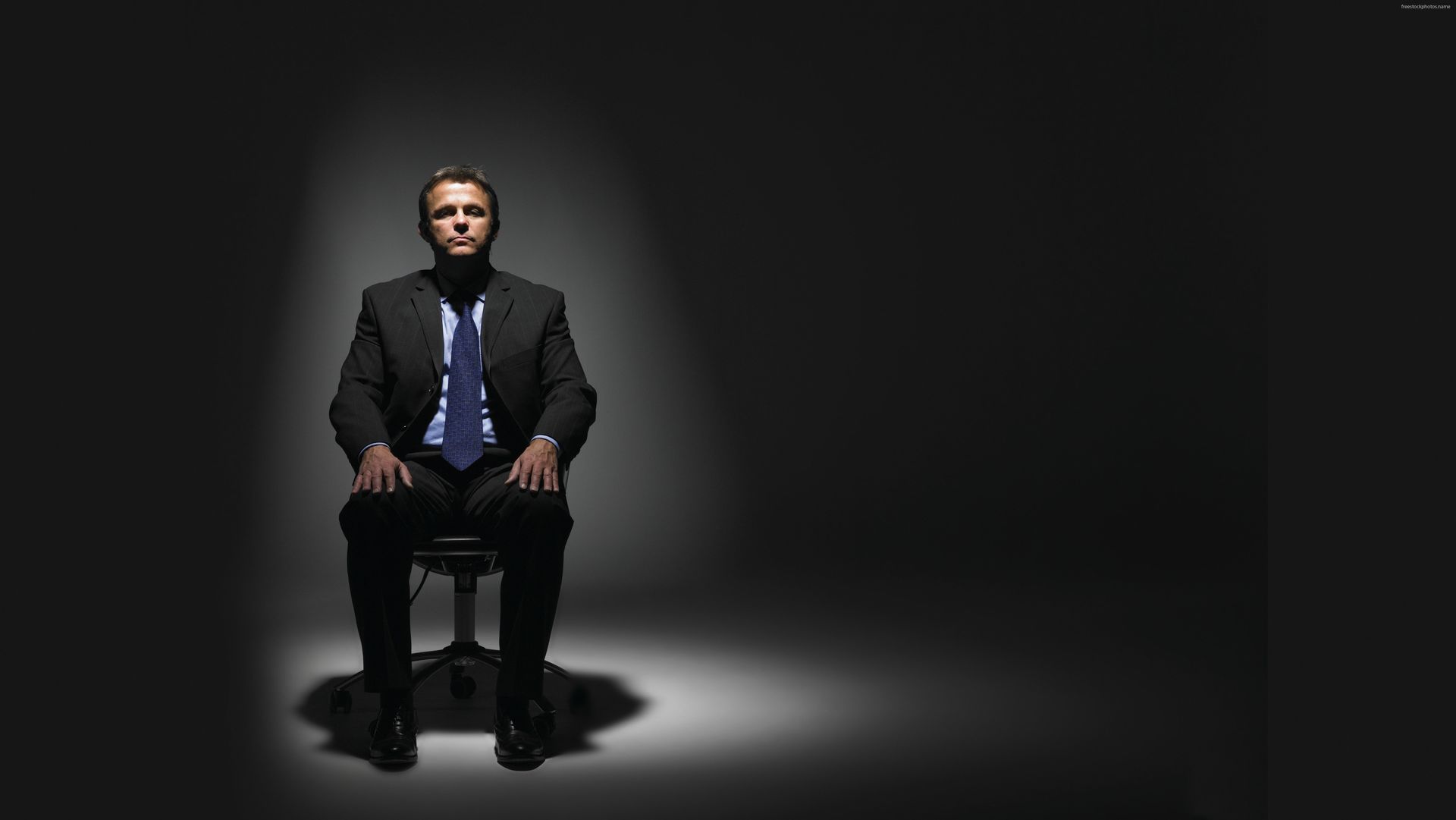
The Cost of Invisibility
The fluorescent lights in the boardroom are humming at a frequency that feels like it is vibrating directly inside my molars, and I am currently calculating the exact distance between my chair and the podium. It is only about 14 feet. To anyone else, it’s a three-step shuffle. To me, in this moment, it feels like a televised crossing of the Rubicon. My suit jacket is pulling across my shoulder blades in a way that suggests the seams are currently engaged in a heroic, though ultimately doomed, struggle against physics. I realize, with a sudden and sharp clarity, that I am not worried about the data on the slides. I am worried about the 44 seconds it will take for my breathing to audible over the microphone once I start speaking.
This is the tax. This is the invisible, compounding interest on a debt I’ve been accruing for years by simply deciding that my body was a secondary concern to my career, my emails, and my peculiar habit of updating software I never actually use.
The Subtlety of Surrender
When you stop being able to trust your lungs to carry you up a flight of stairs without a tactical pause to ‘check your phone’ at the landing, you stop trusting yourself in other arenas too. The erosion is silent. It starts with your wardrobe and ends with your will to take up space in a room.
I was talking to Sage J.-C. the other day-they’re a handwriting analyst with a penchant for identifying the exact moment a person gives up on their ambitions based on the pressure of their pen-and we were looking at a series of signatures from high-level executives. Sage pointed out that as these people ‘let themselves go’ physically, their script began to lose its verticality.
S
The strokes became shallower. The ‘g’ and ‘y’ loops, which represent physical vitality in graphology, began to shrink until they were almost nonexistent. It was as if their subconscious was literally retracting their presence from the page because they no longer felt they had the physical right to exist loudly. Sage mentioned they’d seen this in over 64 distinct cases this year alone. It’s a physical manifestation of a psychological surrender. You don’t just lose the muscle; you lose the audacity to demand things from the world.
The Defense Mechanism of Mockery
I find myself doing this thing lately where I criticize the ‘gym bros’ and the ‘fitness influencers’ for their vanity. I mock the 4 a.m. wake-up calls and the electrolyte powders that cost $34 a tub.
I do this because it’s easier to pathologize their discipline as a mental illness than to admit that I am currently a hostage to my own lethargy. If I can convince myself that being fit is ‘shallow,’ then my current state of being perpetually winded is, by default, ‘deep.’
The Physiological Foundation of Confidence
It’s a comfortable delusion until you’re at the park with your kids and they ask you to play tag. You join in for about 24 seconds before the spots appear in your vision, and you have to sit on the bench, watching them play from a distance. You’ve become a spectator in the most important moments of your life because you didn’t think the ‘cost’ of a donut mattered.
There is a profound public cost to this private failure. Think about the energy you bring to a negotiation when you feel powerful in your own skin versus when you feel like a collection of aches held together by caffeinated hope. Professional confidence is 84 percent physiological. If you don’t believe your body can handle a brisk walk, your brain isn’t going to believe you can handle a high-stakes merger.
We are biological machines, yet we try to operate as if our consciousness is a cloud-based app that isn’t dependent on the hardware. My hardware is currently glitching. I spent $474 last month on ergonomic chairs and standing desks, trying to buy my way out of a problem that can only be solved with sweat. It’s like buying a more expensive gas cap for a car that has no engine.
The body is the only house you can never move out of, yet we treat it like a rental we intend to trash for the security deposit.
Existential Embarrassment
This realization usually hits people in the middle of a mundane catastrophe. For some, it’s the doctor’s office. For me, it was trying to help a friend move a couch that weighed maybe 104 pounds. I couldn’t do it. Not because I didn’t want to, but because my back gave a warning creak that sounded like a dry branch snapping in a winter storm.
The Embodied Failure: Uselessness
My Capacity
Age of Helper
I had to stand there, useless, while someone 14 years older than me did the heavy lifting. The embarrassment wasn’t just physical; it was existential. I realized I had become a burden. I had traded my agency for the convenience of sedentary comfort. The ‘invisible cost’ is that you eventually lose the ability to be the person people call when things get hard.
Reclaiming Capability, Not Vanity
We need a way back. We need a system that doesn’t just promise a six-pack for the sake of a beach photo but promises the restoration of our fundamental human capability. We need to stop seeing exercise as a punishment for what we ate and start seeing it as an investment in our ability to say ‘yes’ to life.
This is about reclaiming that verticality. It’s about being able to stand at that podium and focus on your message rather than your heart rate.
(Opens in new tab)
I often think about the software updates I mentioned earlier. I have 24 pending updates on my laptop right now. I’ll spend 4 hours this week managing digital files I don’t need, yet I’ve spent zero minutes today checking in on the state of my own cardiovascular health. It’s a diversion tactic. If I’m busy ‘optimizing’ my digital life, I don’t have to face the fact that my physical life is in a state of planned obsolescence.
The Terror of Starting Over
I admit that I am terrified of the work. I am terrified of the first 14 days of movement, the soreness that feels like an indictment, and the humility of being a beginner at something I should have mastered decades ago.
Commitment Meter (The Work Ahead)
First 14 Days
The Weight of Inaction
But the alternative is worse. The alternative is a continued shrinkage. A world where I gradually stop traveling because the walking is too much. A world where I stop wearing clothes I love because they no longer fit. A world where I am perpetually ‘tired’-not because I have done so much, but because I have done so little.
The fatigue of inactivity is far heavier than the fatigue of a workout. It’s a leaden, soul-crushing weight that doesn’t go away with sleep. It’s the weight of knowing you are capable of more, but you’ve allowed the gate to rust shut.
Inactivity Weight
Soul-crushing, Leaden, Unliftable.
Workout Weight
Transient, Solvable, Liberating.
If you’re sitting there, feeling the same pull of the jacket or the same hesitation to stand up, know that the cost of staying the same is higher than the cost of changing. Every day you wait is another day you’re paying a tax on your potential. You aren’t just losing your fitness; you’re losing your edge, your presence, and your joy. The question isn’t whether you can afford the time to get back in shape. The question is, how much longer can you afford to keep ghosting yourself?